Obi Emetarom
The Pursuit of African Excellence
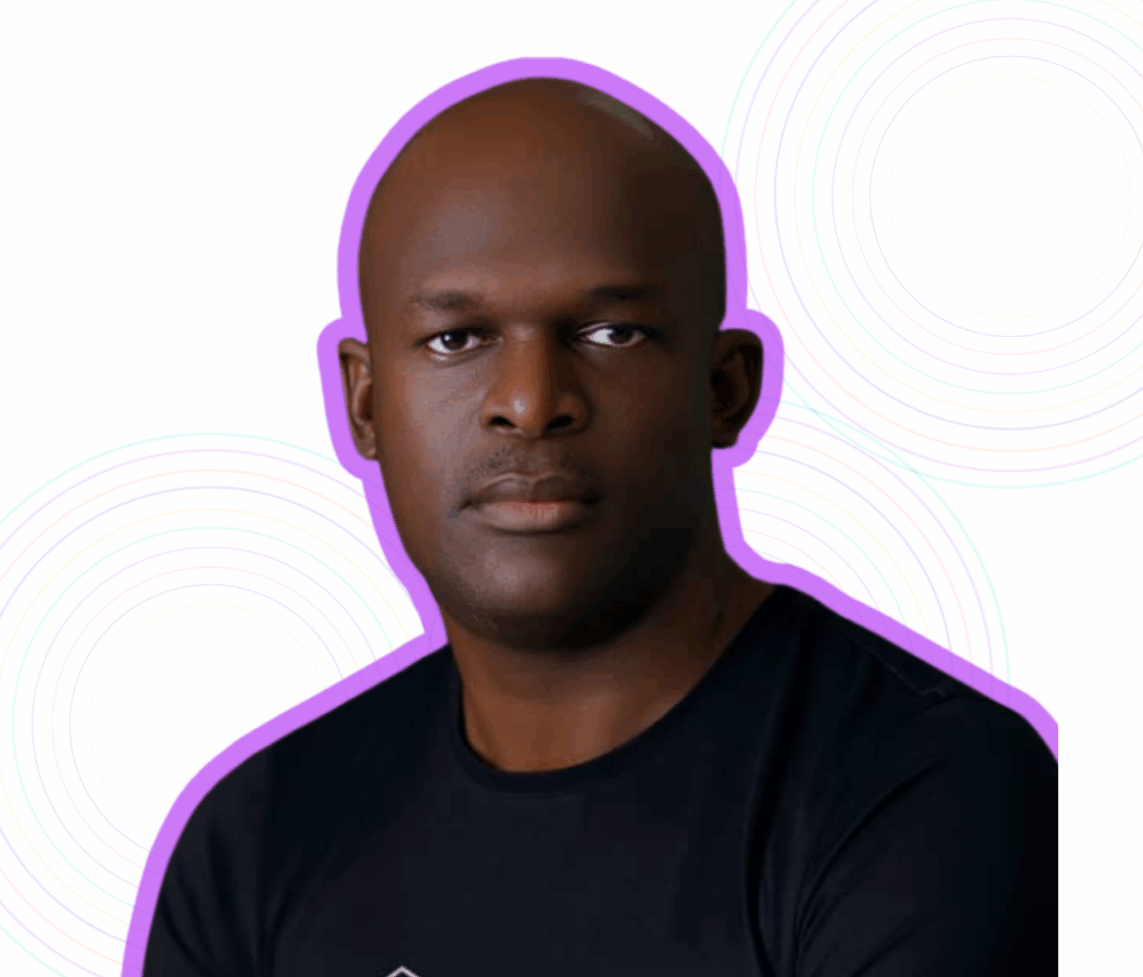

Obi Emetarom is the Co-founder and CEO of Zone, a blockchain-based payment infrastructure connecting financial institutions into a decentralized financial network. Having spent years building traditional banking solutions, Obi’s journey is a decisive leap toward building a fully on-chain financial system. In this story, he reflects on his vision to create technology that is not just world-class but superior, and why African excellence is his driving legacy.
The Vision of Superiority
My background is in Electronic and Computer Engineering. I started my entrepreneurial career after university, founding Parkway Projects, a systems integrator for banks, which gave us the domain knowledge and credibility to start AppZone in 2008. AppZone eventually evolved into Zone.
I’ve always been drawn to how African companies or products can be just as good, and as respected, as the best in the world. I’ve always believed Africa can be truly first world. I am very drawn to the Wakanda story that societies here can become as developed, even more developed, over time. Entrepreneurship for me has been about building advanced technology locally to global standards, the same way any Silicon Valley company would. That’s been a very deep passion and drive. The conviction to solve this problem started purely with payments—making them frictionless, widely adopted, and enabling a cashless society. That original obsession, combined with our experience building traditional banking infrastructure, brought me to the radical idea of Zone.
The Leap to Decentralization
The realization that blockchain was the missing piece came in two phases. The first was purely about payments. We saw the industry’s heavy reliance on centralized intermediaries—the risks, the reliability issues, and the costs. We saw the dependency, the fragility, and the expense, and thought: Is there another way? Since we couldn’t get a license to be the intermediary ourselves, we started thinking of how to bypass the intermediary entirely. That’s when blockchain came up—a peer-to-peer structure with no central middle entity.
The second phase was deeper. We realized blockchain could transform financial services far beyond payments. We saw the future—a regulated blockchain financial system, more efficient, secure, compliant, and reliable. That’s when we knew we were on the right track.
In the beginning, success meant sustainability—building a company that is profitable and can grow steadily. Today, success also includes team quality, governance structure, and brand reputation. Fortunately, I have never felt like quitting. But crazy to embark? Many times. Because often, midway into building something new, you realize the true enormity of what it will take. I genuinely don’t even know what I would do if I quit. There’s no option.
Sustaining Belief in the Face of Ambiguity
At this stage, building the rails of an entire financial ecosystem feels more like excitement than pressure. When dealing with massive uncertainty, I look to the future and the past. The future is looking at the payoff when this succeeds, how exciting the payoff could be, and the impact it could have. The past is looking back and recognizing how many past challenges I overcame or how they simply passed. That helps me trust that this one will pass, too. I’ve learned that truly achieving great things takes time. There’s no shortcut.
What I’ve also learned is that things actually succeed more than people give credit for through perseverance. When you stay on something with dedication, passion, and focus, over time, momentum builds up. The likelihood of you getting to the goal increases, even if you don’t feel it yet.
My personal values of African excellence and commitment to quality shape how we lead. We go for the 1% of the 1% in hiring. In culture, we believe in a flat structure, where everyone has a voice, and humility is core.
The Legacy: Proving African Excellence
The intense level of leadership has come at a cost. Personally, it’s higher anxiety and constant pressure, but your brain adapts. Emotionally, the journey is bipolar—you’re either extremely high or extremely low. Relationally, time is the biggest cost. I’ve become that dad who’s never around, which I never understood growing up, but now I do.
The loneliness doesn’t really come from co-founders; we resolve strategic disagreements by aligning on outcomes. The loneliness comes from other stakeholders—the team, investors, customers, regulators, partners—when you have a strong conviction about a direction, but aligning everyone else becomes difficult.
If I could write a private note to my younger self, it would be simple: “This is a long journey.” Don’t think it’s just boom-boom. Things take longer here. There’s more friction, more interference.
I want the legacy to be African excellence. I want to prove that you can create something from here—not just big, but superior—globally. I want the legacy to be that it’s possible to build world-class, best-in-the-world stuff from Africa. That kind of local example changes what people think is possible. The main fear that keeps me up at night is the regulatory angle. We’re pushing the regulated version of decentralized, on-chain finance. The biggest challenge is how to educate and bring regulators and incumbents along fast enough for this transformation to happen.