Emeka Emetarom
The Boldness to Automate
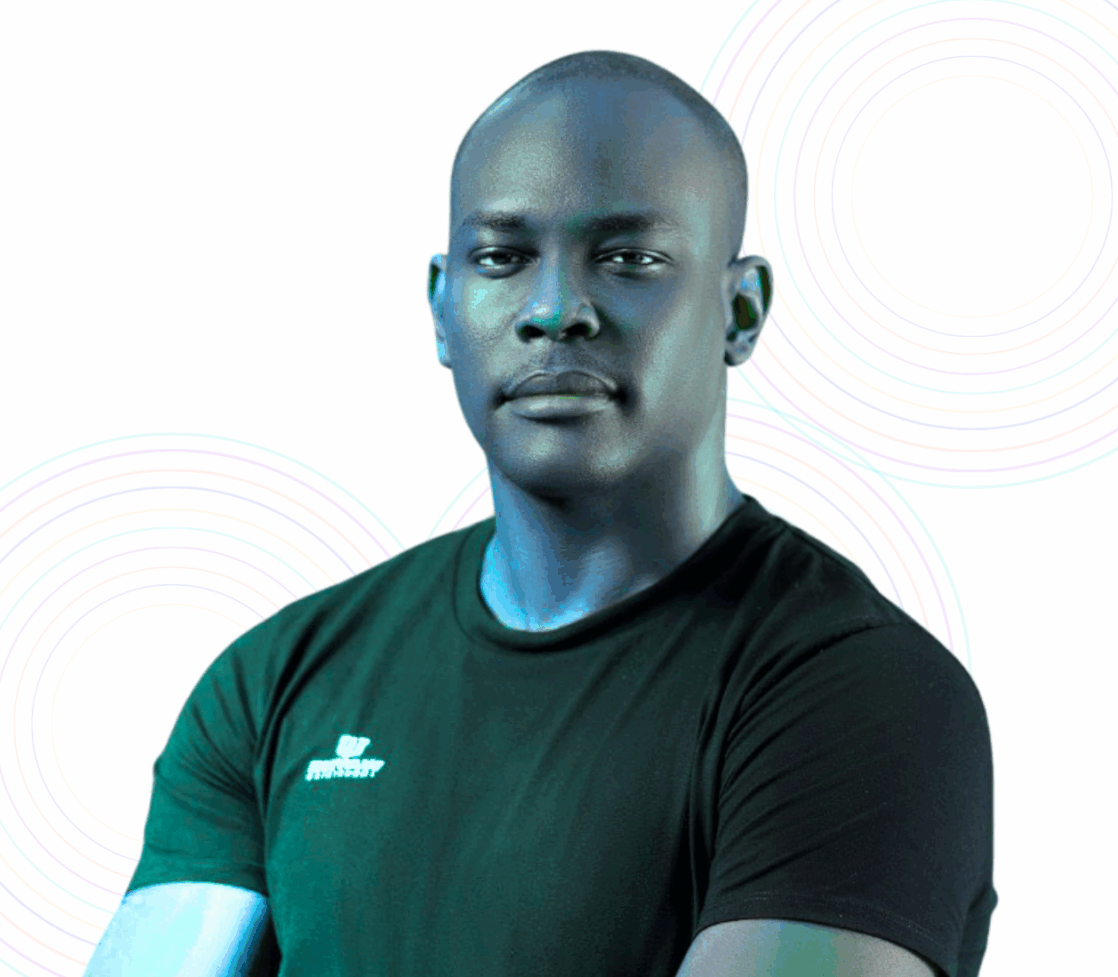

Emeka Emetarom is the Co-founder and CEO of Qore, a company focused on providing fintech infrastructure for banks, Fintechs, MFBs and underserved institutions, enabling them to drive financial inclusion and access. With a background spanning chemical engineering, airtime distribution, and the development of some of Nigeria’s earliest banking software, Emeka’s journey is a relentless pursuit of digitisation and automation. In this story, he reflects on the hidden curriculum of university life, the constant fear of external limits, and why boldness is the only skill necessary for success.
From Chaos to the Call for Clarity
I was born in Ibadan and raised in the East, navigating childhood in a home where discipline, curiosity, and ambition quietly shaped the atmosphere. I later studied Chemical Engineering at FUTO—not because of any grand plan, but because I had been informed that my brother, Obi, was already on the path of Computer Engineering, and as the only two boys in the family, it felt necessary to diversify. Life, however, has its own agenda. I finished school and, almost inevitably, found myself back in technology.
But before that return, I ventured into a pure-water distribution business—my first crash course in the unpredictability of entrepreneurship.
What truly drew me into financial services was not inspiration but irritation—deep concern about the profound inefficiencies burdening the sector. We were building solutions for commercial banks, yet those solutions rarely went live in ways that made real impact. We once developed an affiliate module for a prepaid card management system deployed to a commercial bank. The module allowed the banks’ microfinance bank (MFB) customers to enable their own customers to load prepaid cards and use them for business when they travelled. The idea was great, but the execution failed: customers often still had to call the MFB to get more value moved from their bank accounts to their prepaid cards through a manual and error-prone process. It was a terrible user experience, and it exposed something bigger.
We soon realized that the institutions financing the real economy—the MFIs lending to MSMEs—did not even have proper technology. Many were running on literal paper and Excel sheets. That was the moment everything crystallized: someone had to fix this.
So we began building BankOne, a cloud-based core banking platform that dramatically lowered the barrier to digital transformation. From then till now, our emotional thesis has remained consistent: digitization and automation as the foundation for economic progress. When processes become faster, productivity rises. When the cost drops, more capital becomes available for investment. And because finance is the bloodstream of any economy, automating it is the only sustainable way to scale prosperity.
The Unbreakable Spirit: How to Stomach the Worst
One of the most defining truths of my journey is this: I have never sincerely believed I should quit. Hard moments come, but none have felt harder than the experiences that formed me long before now.
During the pure-water venture, I naively tried forecasting profitability on an Excel sheet. I thought business was math—until the Lagos rainy season crashed the party. I remember being stuck in a delivery truck for hours, drenched, cold, unprepared, and wondering how I had miscalculated so severely. It was chaotic, uncomfortable, and even demoralizing. Yet, in that moment, a quiet conviction settled in me: this is the process—just keep going.
Years later, at AppZone, there were seasons when we could only pay partial salaries. I have driven home for Christmas, knowing the company accounts were empty and that we had no funds for diesel for January. But life has a strange rhythm. More than once, as we were returning to Lagos after a break, a long-awaited project got approved, and funds landed just in time. Every time we approached the cliff, something pulled us back.
Then there were the operational disasters. Once, during a cloud infrastructure migration, millions of accounts were down for days. We slept two hours a night for a full week. When the crisis finally ended, and everything came back online, what surprised me was not relief but realization: we didn’t break.
That moment taught me that resilience is not something you measure in advance. You only discover what you can survive when survival becomes your only option.
The Unseen Weight of Promise
One of my deepest fears is tied to people—specifically, the incredibly talented individuals with global options who choose to join us. They come because they believe in the mission. They accept stock options, make sacrifices, and in doing so, place a part of their future in our hands. It is a profound responsibility.
But I am also deeply aware of the limits imposed by the environment: macroeconomic constraints, GDP per capita realities, infrastructural friction—all the things we do not control. The fear is that even if we execute flawlessly, external forces could still blunt the outcomes our people deserve. That weight is not something I take lightly.
This journey has also taken a toll on energy, relationships, and especially sleep. Most people end their workday at 6 PM; for me, 6 PM often feels like halftime. Because family, health, and relationships are non-negotiable, sleep is the only thing left to sacrifice. I only slow down when my body forces the issue.
As a leader, I insist on excellence because anything less becomes too costly in the long run. I value intellect over rote experience—experience can be a repository of memorized responses, but sharp minds solve problems. And I push for the best possible decisions, because the mission deserves nothing less.
The Final Lesson: The Power of Boldness
One of my greatest personal flaws, which I have had to confront, is the tendency to appear emotionally robotic. My worldview is deeply rational; I often see emotions as biochemical processes. So when people are overwhelmed, my instinctive response used to be: “Relax, this isn’t real—don’t let it consume you.”
Of course, that is not empathy. It feels like dismissing someone’s emotional experience. I’ve had to unlearn and retrain myself to respond with presence, not correction.
Interestingly, some of my most valuable education came not from the classroom but from organizing university parties. Those events were full-scale operations—planning, financing, logistics, people management, crisis control. Looking back, they quietly prepared me for building companies.
If I were to write a note to my younger self, it would contain just two words: Be bold.
Life bends toward the will of the bold. Many brilliant people fail not because they lack ability, but because they doubt themselves into paralysis. Meanwhile, those who know less often move faster simply because they are not second-guessing every step. Boldness is not a luxury; it is a strategy.
In the end, my motivation is not about money. It has always been about solving problems at scale. I want our work to continue transforming financial services across Africa. I want the company to outlive us—to remain a living testament to what is possible when courage, clarity, and competence converge.
My hope is that my journey becomes a signal to others—that they, too, can build, reshape systems, and lead with intention. If I am a vessel, then may the impact of that vessel inspire a generation of builders to create boldly and live with purpose.